
Why Nishat Was First
When you're building something for the denim industry, you don't start by asking the smallest mills whether your idea is interesting. You go to the big ones first. You need to know, early, whether the people who actually understand the complexity of the trade show floor — who've been sending collections to Europe for decades — see the same problem you're trying to solve.
Nishat Mills is as established as it gets in Pakistan. Founded in Lahore in 1951 — the same year Pakistan was still less than five years old — they've outlasted multiple economic cycles, currency crises, and the complete restructuring of the global textile trade. They export to over 40 countries. They supply Best Seller A/S, the Danish group behind JACK & JONES, VERO MODA, and ONLY. And in the last fiscal year, they put Rs.12 billion into a brand-new dedicated denim plant in Faisalabad.
If Nishat saw the problem DenimNotes was solving, we were building the right thing. So they were Week 1.
Who Nishat Mills Actually Is
People outside Pakistan sometimes don't fully appreciate the scale of what Nishat represents. This isn't a mid-size mill that got lucky with a good buyer. Nishat Mills Limited is listed on the Lahore Stock Exchange and is the flagship company of the Nishat Group — one of Pakistan's most significant industrial conglomerates, operating across textiles, banking, energy, and cement.
The textile business is vertically integrated: spinning, weaving, processing, stitching. European sales account for roughly 25% of revenue. Asia, Africa, and Australia another 20%. They are not waiting for buyers to find them — buyers already know them. The Rs.12 billion Faisalabad denim plant isn't a gamble. It's a calculated expansion into a category they know their existing buyer base wants more of.
What Happened in That Room
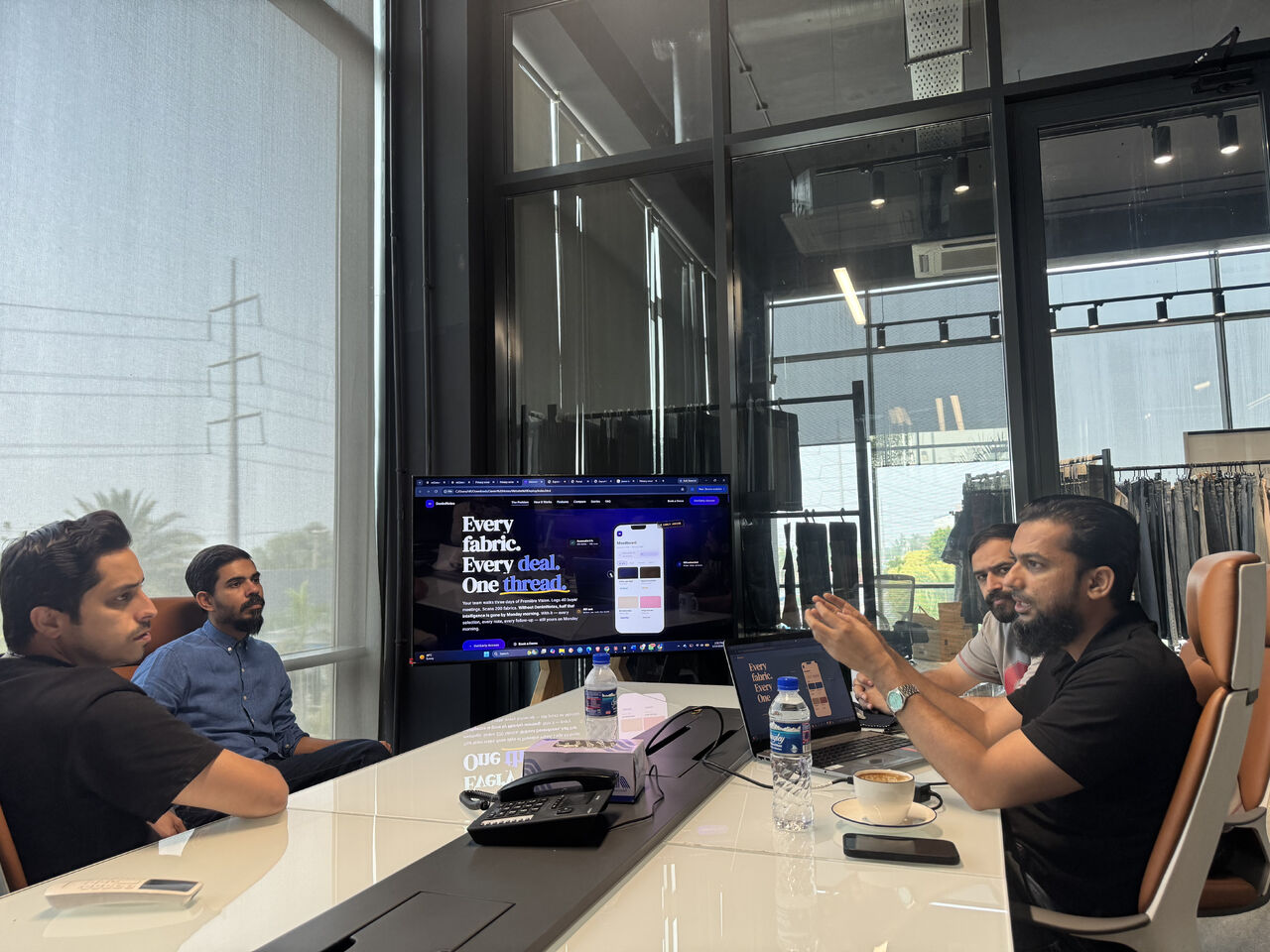
We walked into Nishat's Lahore office on a regular weekday. Modern building, glass walls, a proper conference room that looks out into the showroom floor — you can see racks of denim fabric through the glass behind you as you sit at the table. Four of us on one side, their team on the other. Someone brought coffee. The screen at the end of the room was big enough that you could read every word on the DenimNotes website from across the table.
I pulled up the site — "Every fabric. Every deal. One thread." — and we walked them through what DenimNotes actually does. Not a slide deck. Just the real product, on a real screen, in a real conversation.
"The thing about walking into a room like that one is you realise very quickly whether you've built something real or just something that sounds good in a pitch. Nishat asked real questions. That told us we were in the right place."— Umer Farooq Qureshi, Founder, DenimNotes
What they kept coming back to was the post-show layer. Nishat already has buyer relationships — solid ones, built over years. What they don't have is a clean, structured record of what happens at Kingpins Amsterdam or Première Vision. Which articles came up in which meetings. What the actual feedback was. Which buyers shortlisted something and never followed through, and which ones always convert.
That data exists — it lives in the heads of the sales team and in a patchwork of WhatsApp messages and handwritten notes. DenimNotes makes it structured. And when you have 40+ export destinations and a Rs.12 billion new plant to fill with the right orders, structured intelligence is exactly what you need.
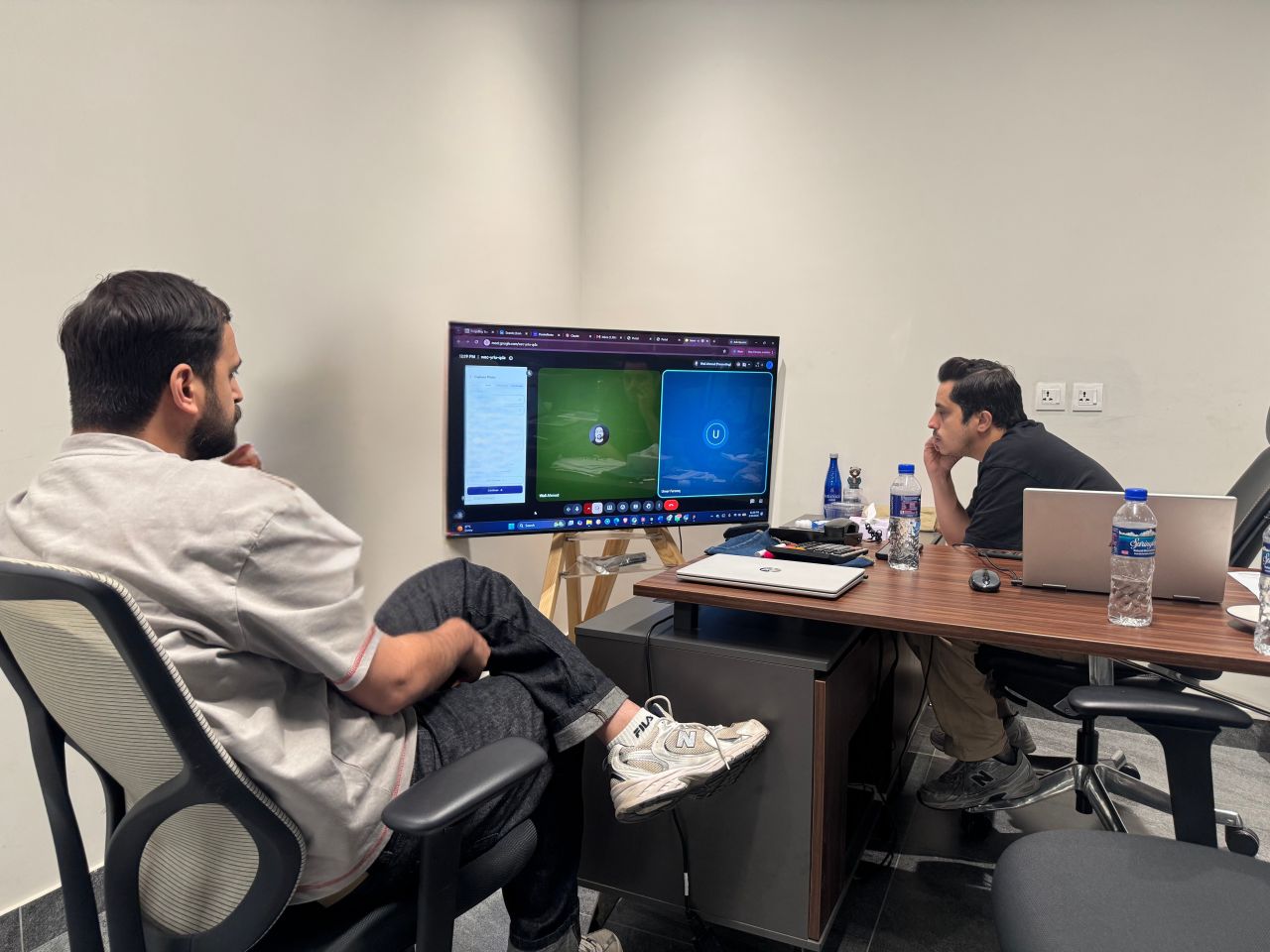
We also did a follow-up session remotely — just two people on a screen, working through the specifics of how the mill-side workflow would look in practice. That's the photo that looks the most unglamorous of the three, and it's probably the most important one. Because that's where the real evaluation happened.
The Buyers Already in Their Network
Part of what makes Nishat such an interesting early partner is the quality of their existing buyer portfolio. When we looked at their export data — they shared transaction records spanning multiple product categories — it confirmed what their reputation already suggested: these aren't casual one-time buyers. These are serious, repeat accounts.
| Buyer | Market | Category |
|---|---|---|
| Best Seller A/S | Denmark / Europe | Men's stretch denim & cotton pants (JACK & JONES) |
| Branc Machine International | Australia | Men's basic 5-pocket pants, chino shorts |
| Fox Wholesalers PTY Ltd | Australia | Printed jackets, trousers, shirts |
| ZACLIE | Belgium | Home textile — bath robes, towelling |
| Nishat International FZE | UAE | Women's printed suits |
The Best Seller relationship alone is significant. Best Seller's brands — JACK & JONES, VERO MODA, ONLY, SELECTED — move hundreds of millions of denim units across Europe annually. Getting into that supply chain and staying there requires consistency, compliance, and quality that isn't easy to maintain. Nishat has been doing it.
The Rs.12 Billion Bet on Denim
Nishat's new dedicated denim plant in Faisalabad deserves its own paragraph. Rs.12 billion — roughly £34.5 million at current rates — going into purpose-built denim infrastructure. Rope dyeing lines. Dedicated weaving capacity. Finishing and sampling facilities. In a city that's been Pakistan's weaving heartland for generations.
This isn't a hedging move. It's a statement. And for a company with Nishat's buyer relationships, the question isn't whether they'll find customers for that new capacity — it's whether their sales workflow at trade shows is sophisticated enough to maximise what they're walking in with.
That's the gap DenimNotes fills. And sitting in that glass-wall conference room in Lahore, explaining it to people who clearly understood exactly what that problem costs them — that was the moment Week 1 became real.
- Nishat's existing buyer relationships prove the DenimNotes opportunity: serious mills with serious buyers need structured post-show intelligence, not just better note-taking
- The Rs.12 billion Faisalabad plant creates new urgency — more capacity means more pressure on the trade show sales process to perform
- The Best Seller / JACK & JONES relationship signals the compliance and quality bar Nishat already operates at — DenimNotes needs to match that standard
- The follow-up Google Meet after the in-person visit was where the real evaluation happened. Not every yes comes in the first meeting
- Going to Lahore first — not the denim cluster in Karachi — taught us something: the problem is industry-wide, not geography-specific