Diamond Denim and the Sapphire Group: What the Numbers Mean
Pakistan has three textile conglomerates that operate at a different order of magnitude from everyone else. Nishat is one. Gul Ahmed is another. Sapphire Group is the third — built over decades from a spinning base into one of the country's most diversified industrial operations: textiles, retail, power generation, real estate. 16,000 employees. Approximately 30 production units. The kind of infrastructure that takes generations to build and can't be replicated quickly.
Within the Sapphire Group sits Diamond Denim — formally Diamond Fabrics Limited — established in 1990 as the group's dedicated denim operation. At 90 million meters of annual fabric capacity, Diamond Denim is vertically integrated the full length of the production chain: ring-spun yarn, indigo dyeing, denim weaving, finishing (washing, distressing, treatments), and garment manufacturing. That means a buyer can source fabric, follow it through development, and take a finished garment — all from one supplier relationship within one group.
What distinguishes Diamond Denim from a straightforward commodity mill is the construction range. They produce standard indigo denim, yes — but also jacquards, corduroys, stretch constructions, and non-denim wovens. A buyer walking into the Diamond Denim showroom can find things that don't exist in most Pakistani mills' catalogues. The vertical integration and group-level resources make that range possible. The 90 million meter capacity is what makes it consistent.
The July 2 Visit: Showroom, Collection, Demo
Most of DenimNotes' supplier onboarding this season has happened virtually — Google Meet calls bridging hundreds of kilometers from Lahore to Karachi, five to eight people on screens, sharing slides and walking through platform features. The Diamond Denim session was different from the moment it was scheduled. We were going to them.
On July 2, 2026, the DenimNotes team visited the Diamond Denim showroom in person. What we found was a mill that takes its buyer-facing presentation seriously. The showroom is clean, well-appointed, and clearly designed for serious review meetings — not just a warehouse tour. The Diamondenim team had prepared.
"Walking into a showroom where 20+ garments are already laid out on the floor — that's a supplier that understands what buyers need to see. And it's exactly what DenimNotes needs to capture."— Umer Farooq Qureshi, Founder, DenimNotes
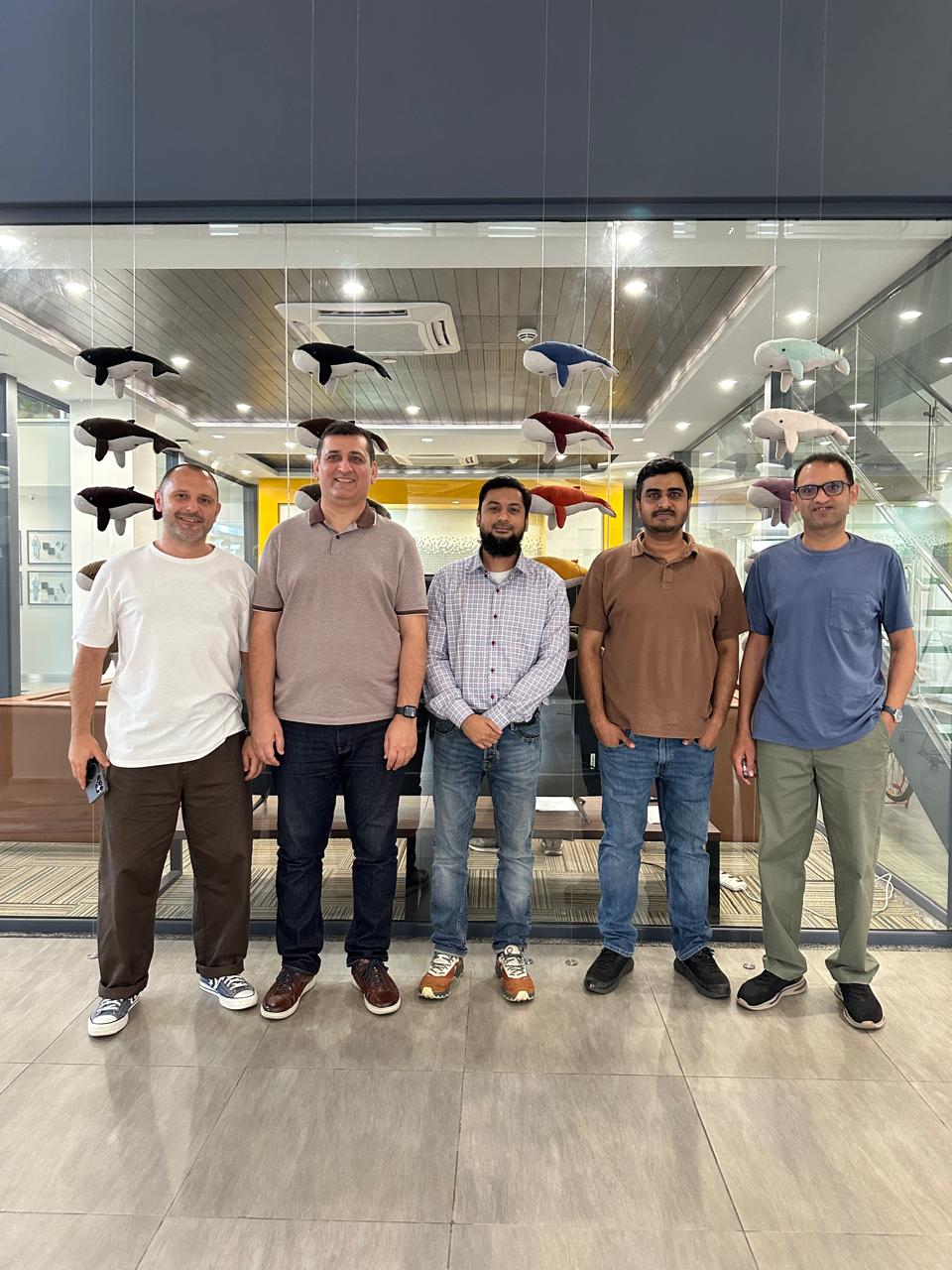
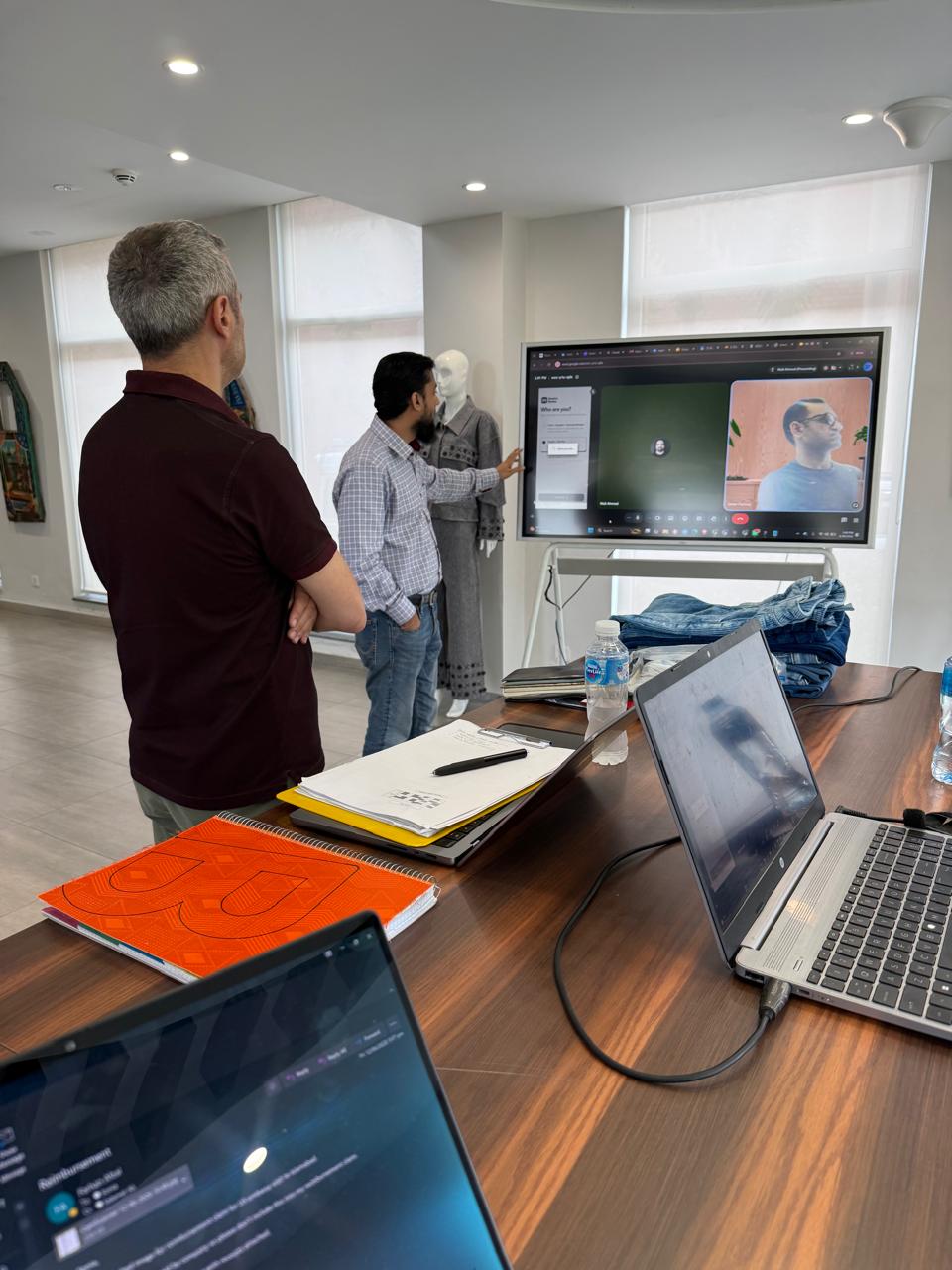
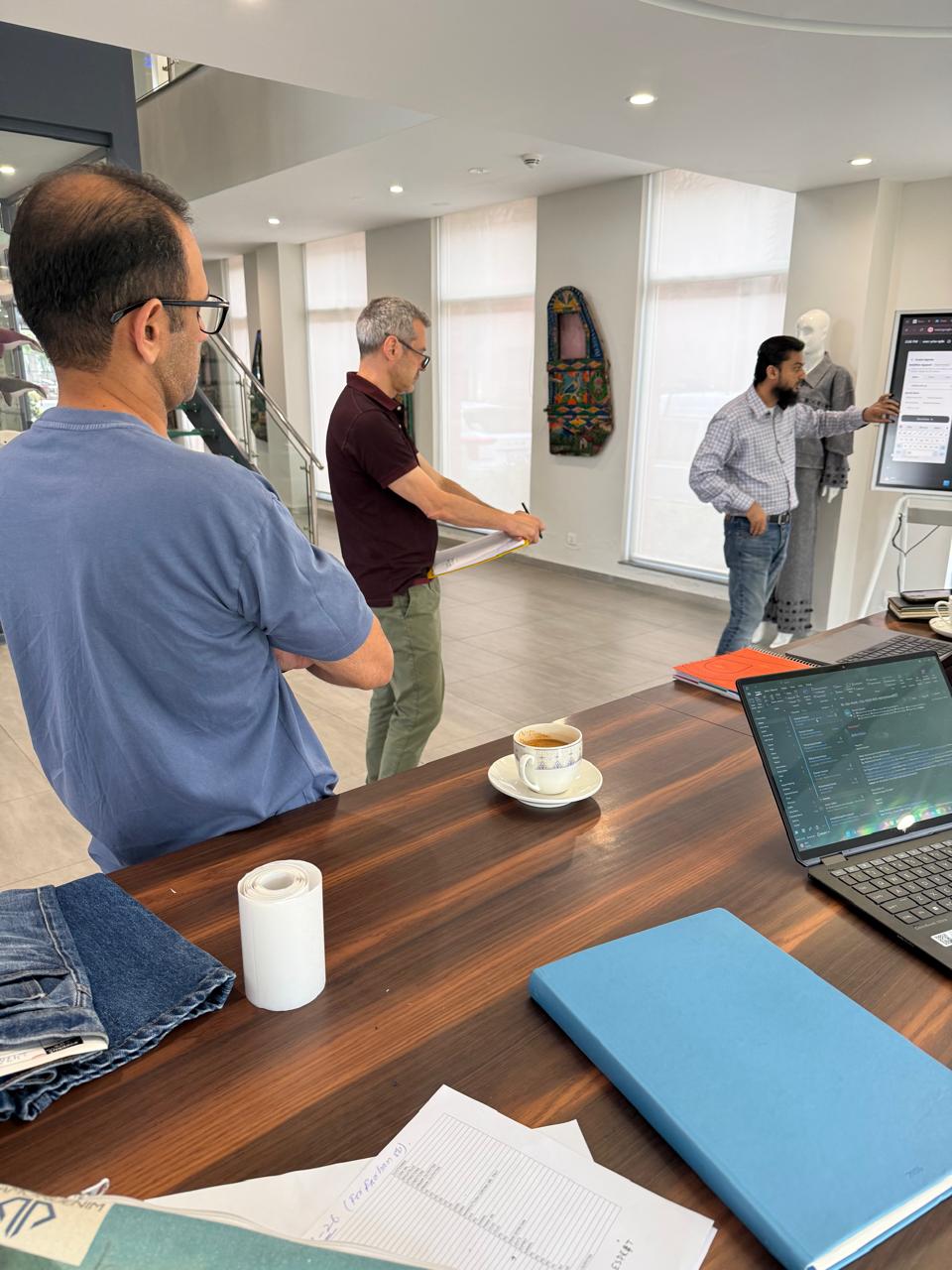
Five people in the room across both teams. Two laptops on the conference table. A large display screen connected and ready. Folded fabric swatches. Printed spec sheets. An espresso. The kind of meeting where you know the work is actually going to happen.
What Was on the Floor: Reading a Denim Collection
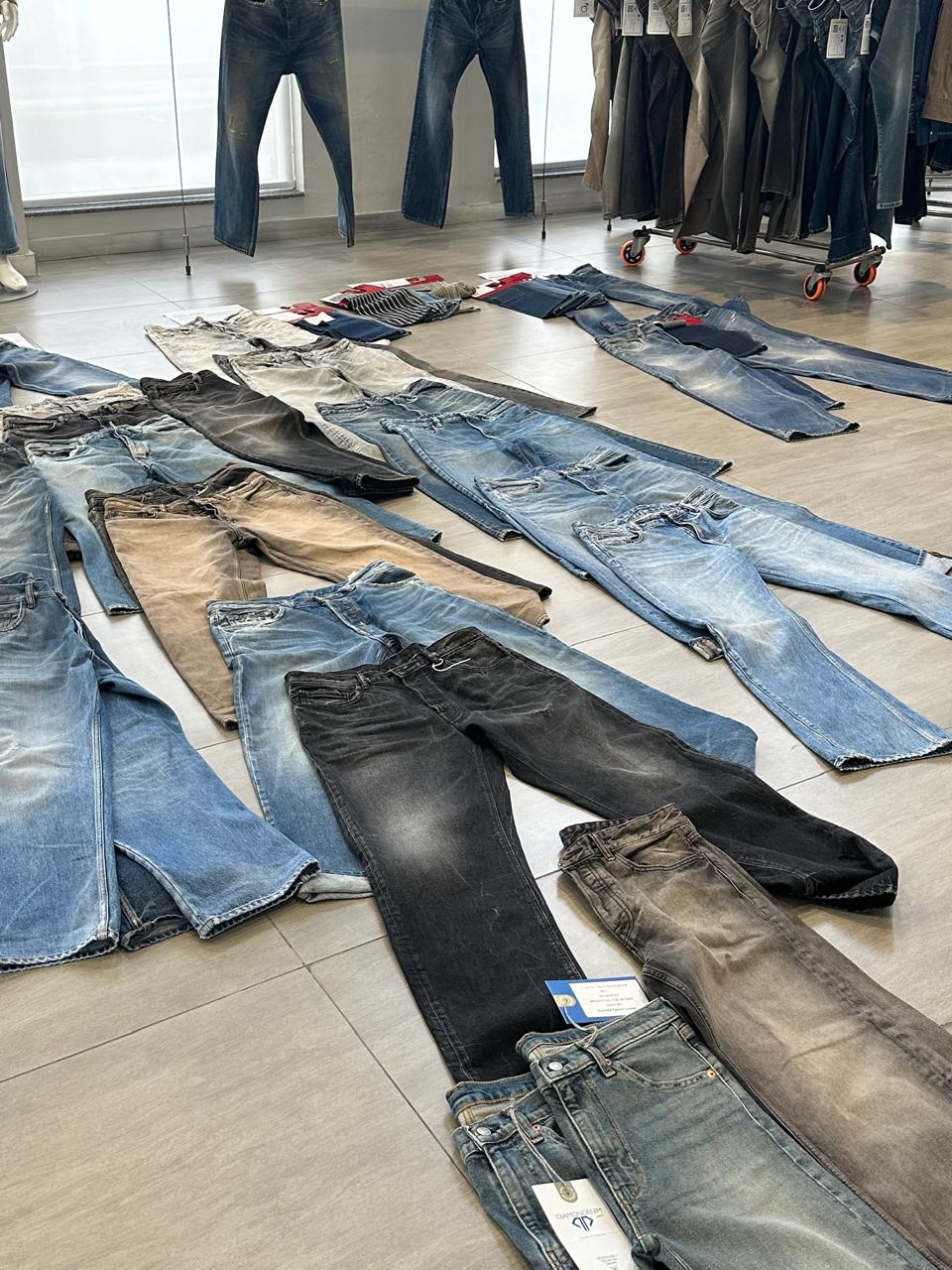
The most striking moment of the visit was walking into the showroom and seeing Diamond Denim's collection laid out across the floor in its full breadth. Not hung on rails, not stacked on shelves — laid flat, pair by pair, style by style, wash by wash. It's the way the most confident denim mills show their work: let the product speak without the friction of a rack.
What the collection showed was range. Not just volume — Diamond Denim doesn't need to prove volume at 90 million meters per year — but the kind of range that signals genuine finishing capability:
- Light blue stonewash — multiple washes including classic stonewash and whiskered finishes across slim and straight cuts, produced via enzyme washing rather than the pumice stone process that traditional stonewash uses
- Coloured denim — a strong tan/caramel coloured denim and grey alternatives, both showing sulphur dyeing capability (the chemistry required for non-indigo denim colourways)
- Black and charcoal — including a rich black/charcoal with tonal fading, which requires precise control of the oxidation and reduction chemistry to achieve consistent tonal gradients
- Distressed and destruction finishes — deliberate blowouts and fraying executed cleanly, which signals competence in both the mechanical finishing process and quality control (destruction is easy; controlled destruction is not)
- Rigid and stretch constructions — across multiple silhouettes, including both cotton-core stretch and the more premium T400 (bi-component polyester) constructions that premium brands specify
Reading a denim collection this way — laid flat, walk the floor — tells you things that a sample room doesn't. When 20+ pairs are next to each other, you can see the consistency of wash, the thread tension in the seams, whether the pocket placement is the same across silhouettes, whether the fading looks chemical or natural. Diamond Denim's collection held up to that scrutiny. At 90 million meters a year, it needs to.
The Live DenimNotes Demo
Once the collection review was done, we ran the DenimNotes platform live on their display screen. This is where in-person demos become fundamentally different from virtual ones. When you're standing in a showroom with the actual garments around you, the workflow becomes tangible — not hypothetical.
Article hang tag scanning: With actual Diamond Denim hang tags in hand, we demonstrated the OCR scanner reading article number, composition, weight, and wash code in under 2 seconds. The difference between a diagram of this feature and doing it with a real tag is immediate.
Buyer meeting capture: Walked through how a Diamond Denim sales rep would log a buyer interaction at Kingpins — recording which articles the buyer shortlisted, their verbal feedback by voice note, and pricing context — all without leaving the app.
Post-show analytics: Showed the sales director view after a show — hit rate per article, which buyers engaged with which styles, conversion from shortlist to sampling request.
The Diamond Denim team's response to the live demo was direct: the offline capability resonated immediately. Kingpins Amsterdam has notoriously patchy wifi during peak hours — hundreds of buyers and suppliers all competing for the same bandwidth. A tool that captures in under 200ms and syncs later is not a nice-to-have in that environment — it's a requirement.
Why In-Person Onboarding Changes the Conversation
In the months since we began DenimNotes' supplier onboarding programme, we've run most sessions virtually — and those meetings have been productive and substantive. Naveena Denim Mills across five calls from Lahore to Karachi. Artistic Milliners in an eight-person session with technical and business stakeholders on both sides. Virtual works.
But the Diamond Denim visit showed what in-person unlocks. When you're in the same room as the garments, the demo stops being abstract. The sales rep holding a hang tag and watching DenimNotes scan it in two seconds is a different experience from watching a screen recording of someone else doing it. The gap between "this seems useful" and "I can see exactly where this fits" collapses.
It also changes the conversation around fit. In a virtual demo, questions tend to be about features: does it do X, can it handle Y. In person, with the product in the room, questions become operational: how would we set this up for the show, what does my rep's morning look like on day one of Kingpins, how do I brief the team. That's the conversation that leads to a committed pilot rather than a follow-up call.
- Diamond Denim by Sapphire is one of Pakistan's largest denim producers — 90M meters/year capacity inside the 16,000-employee Sapphire Group
- The July 2 visit was in-person — 5 people in the Diamond Denim showroom, garment collection laid out, DenimNotes running live on their display
- The collection showed real design range: light blue to black, distressed finishes, coloured denim, multiple silhouettes — vertically integrated capability at scale
- In-person demos with actual hang tags collapse the gap between feature awareness and operational readiness faster than virtual sessions
- Offline capture resonated immediately — Kingpins wifi is always contested, and a tool that logs in 200ms and syncs later is a genuine competitive advantage on the show floor